Erinnerung als höchste Form des Vergessens
AKT III – Exhibition and Programme
1 March – 30 April 2025
Exhibition by Ute Richter, featuring a performance by Angelika Waniek and artistic contributions by Max Baitinger, Mandy Gehrt, Juliane Jaschnow, Susanne Keichel and Ipke Starke, as well as Slacknetz Leipzig e.V.
-> Documentation Exhibition
Program:

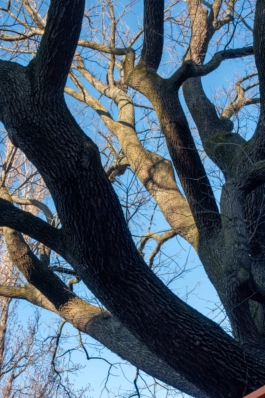
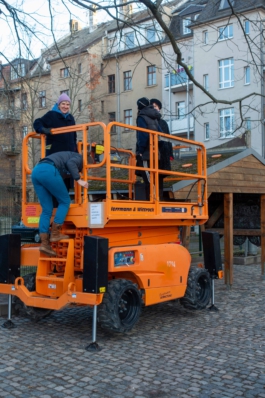
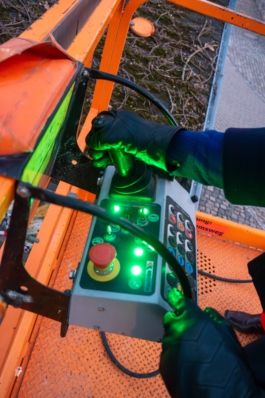
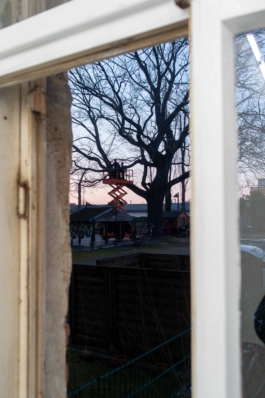
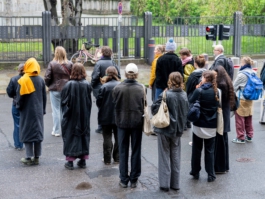
Photos: Adrian Lück
24 April, 5 pm / 16 March, 4:30 pm
Unknotting / Paying Attention, Reconnecting
Angelika Waniek in collaboration with Inga Martel
Performance
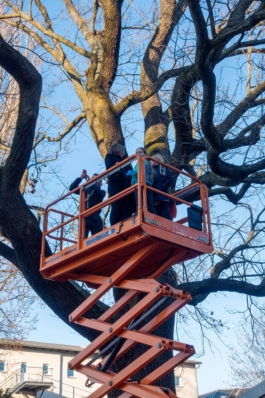
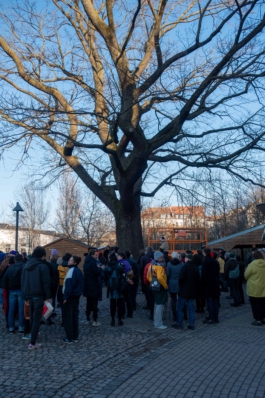
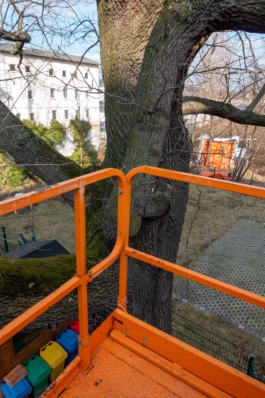
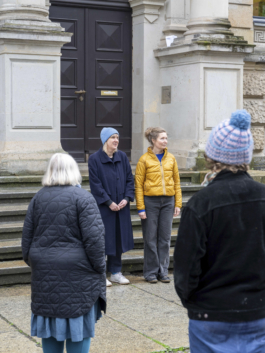
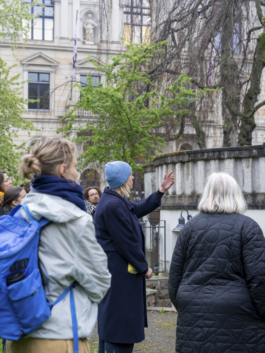
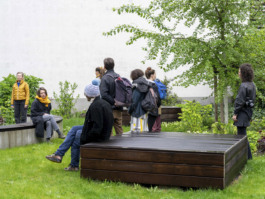
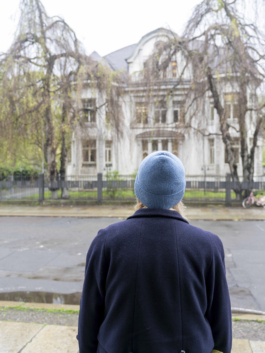
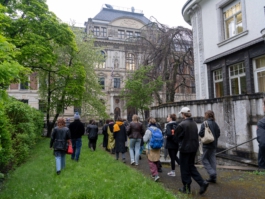
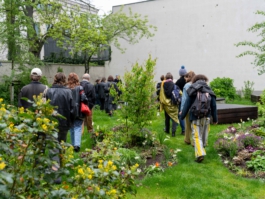
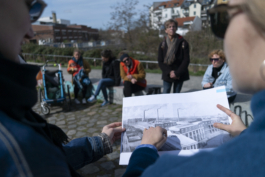
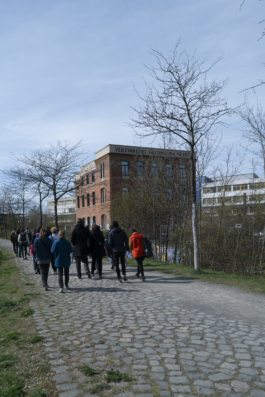
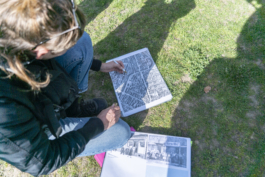
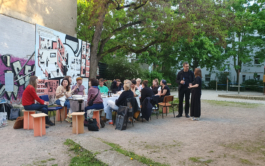
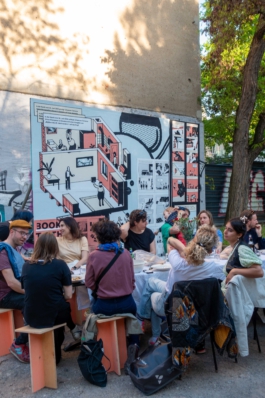
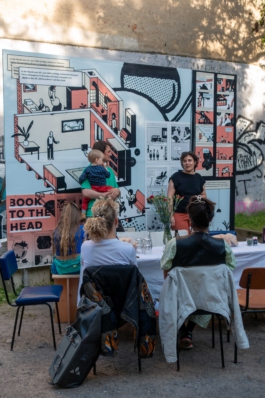
Unknotting / Paying Attention, Reconnecting is an exploration of witnessing in public space, a performative situation situated in the neighbourhood of plants. Together with Inga Martel, artist and somatic researcher, performer Angelika Waniek turns her attention to individual life stories, subjective experiences, plants and their traces. The period being witnessed is that of National Socialism. The witnesses are those who were targeted by violence under National Socialism, but also trees as supposedly silent witnesses, towards which Waniek and Martel turn their attention. Two such trees stand in the immediate vicinity of Kunstraum IDEAL and the Academy of Fine Arts Leipzig (HGB) – places to which the artists feel connected.
16 March // 4:30 pm / Kunstraum IDEAL
Unknotting, Reconnecting
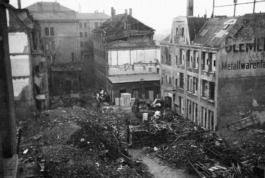
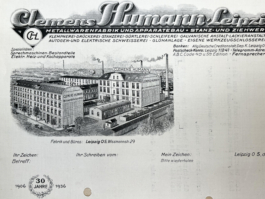
Kunstraum IDEAL is located on the former industrial premises of the Clemens Humann company, a metalworks factory that supplied the armaments industry during the Second World War, particularly the aircraft manufacturing sector. Forced labourers were also employed there, primarily from the Soviet Union, France, Spain, Estonia, Belgium, Italy, Croatia and the Protectorate of Bohemia and Moravia.
Source: Leipzig Memorial Museum for Forced Labour
www.zwangsarbeit-in-leipzig.de/karte
24 April // 5 pm / Academy of Fine Arts Leipzig (HGB)
Paying Attention, Reconnecting
The performance near the HGB takes place in collaboration with the exhibition Partizan★ke Art – The Art of Women's Resistance in Yugoslavia and Carinthia, which focuses on the still largely overlooked history of women's resistance to German occupation and the Axis powers in Yugoslavia.
5 April, 2 pm
Guided Neighbourhood Tour: Stelzenhaus – organised by the Leipzig Memorial Museum for Forced Labour
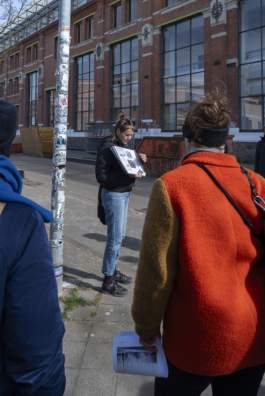
The Leipzig Memorial Museum for Forced Labour regularly offers free public guided tours through Leipzig’s neighbourhoods. During these tours, participants visit former sites of forced labour and camp locations from the Nazi era. Through the sites themselves and individual biographies, visitors gain insight into the history, fate and everyday lives of those subjected to forced labour under National Socialism. As part of the exhibition Remembrance as the Highest Form of Forgetting at Kunstraum IDEAL, this tour focuses on the Stelzenhaus and its surroundings in Plagwitz, where the second act of the project took place as a public intervention in January.
As an industrial monument, the Stelzenhaus is also a site of remembrance of forced labour during the Nazi era. During the Second World War, the company based there produced, among other things, the “Siegfried” armoured shield. Forced labourers and prisoners of war were employed in its production. As a centre of Leipzig’s industrial activity, Plagwitz played a particularly significant role in the system of forced labour under National Socialism. Alongside insights into the corporate histories of companies such as Grohmann & Frosch, to which the Stelzenhaus belonged, the tour focuses in particular on the living conditions of forced labourers. Their experiences of insecurity, suffering and death, as well as acts of humanity and various forms of resistance against involuntary exploitation and racial discrimination, are central themes of the tour.
The Leipzig Memorial Museum for Forced Labour commemorates the victims and consequences of forced labour under National Socialism. It serves as a point of contact for survivors and their families, researches lesser-known aspects of the subject and collects historical testimonies. Public events, guided tours, neighbourhood walks and educational programmes complement the exhibition at the site of HASAG, the largest armaments company in Saxony.
Further information: www.zwangsarbeit-in-leipzig.de
26 April, 6 pm
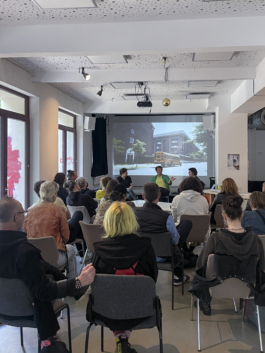
Artist Talk with Mandy Gehrt at Pögehaus
Mandy Gehrt’s artistic practice explores forms of remembering and preserving, cultures of commemoration and the construction of history. Her interests include private collections and personal narratives, as well as archival practices and collective commemorative rituals. Through her ongoing artistic archive project, she aims to map the individual memories of Hungarian Jewish Holocaust survivors who were forced into labour at the Buchenwald subcamp in Markkleeberg (Leipzig district).
In this conversation, Mandy Gehrt will share insights into her research in Germany, Hungary, Cyprus and New York, through which she traced the survivors’ life journeys as far as New York and investigated connections with archives and museums. In this context, she also visited survivors’ families and explored their individual practices of remembrance.
30 April, 6 pm
Conversation with the curators and participating artists at IDEAL
The three-part exhibition project was developed through close collaboration between Ute Richter, Angelika Waniek, Clara Hofmann and Gregor Peschko. The project’s graphic design and banner were created in collaboration with graphic designers Nelly Nakahara and Gerrit Brocks.
Supported by the Cultural Foundation of the Free State of Saxony, the Cultural Office of the City of Leipzig, the Stiftung Kunstfonds, the Federal Government Commissioner for Culture and the Media, and the Saxon funding programme Sehnsucht nach Freiheit. This measure is co-financed by tax revenue on the basis of the budget adopted by the Saxon State Parliament.

Erinnerung als höchste Form des Vergessens
AKT III – Exhibition and Programme
1 March – 30 April 2025
Exhibition by Ute Richter, featuring a performance by Angelika Waniek and artistic contributions by Max Baitinger, Mandy Gehrt, Juliane Jaschnow, Susanne Keichel and Ipke Starke, as well as Slacknetz Leipzig e.V.
-> Documentation Exhibition
Program:
Photos: Adrian Lück
24 April, 5 pm / 16 March, 4:30 pm
Unknotting / Paying Attention, Reconnecting
Angelika Waniek in collaboration with Inga Martel
Performance
Unknotting / Paying Attention, Reconnecting is an exploration of witnessing in public space, a performative situation situated in the neighbourhood of plants. Together with Inga Martel, artist and somatic researcher, performer Angelika Waniek turns her attention to individual life stories, subjective experiences, plants and their traces. The period being witnessed is that of National Socialism. The witnesses are those who were targeted by violence under National Socialism, but also trees as supposedly silent witnesses, towards which Waniek and Martel turn their attention. Two such trees stand in the immediate vicinity of Kunstraum IDEAL and the Academy of Fine Arts Leipzig (HGB) – places to which the artists feel connected.
16 March // 4:30 pm / Kunstraum IDEAL
Unknotting, Reconnecting
Kunstraum IDEAL is located on the former industrial premises of the Clemens Humann company, a metalworks factory that supplied the armaments industry during the Second World War, particularly the aircraft manufacturing sector. Forced labourers were also employed there, primarily from the Soviet Union, France, Spain, Estonia, Belgium, Italy, Croatia and the Protectorate of Bohemia and Moravia.
Source: Leipzig Memorial Museum for Forced Labour
www.zwangsarbeit-in-leipzig.de/karte
24 April // 5 pm / Academy of Fine Arts Leipzig (HGB)
Paying Attention, Reconnecting
The performance near the HGB takes place in collaboration with the exhibition Partizan★ke Art – The Art of Women's Resistance in Yugoslavia and Carinthia, which focuses on the still largely overlooked history of women's resistance to German occupation and the Axis powers in Yugoslavia.
5 April, 2 pm
Guided Neighbourhood Tour: Stelzenhaus – organised by the Leipzig Memorial Museum for Forced Labour
The Leipzig Memorial Museum for Forced Labour regularly offers free public guided tours through Leipzig’s neighbourhoods. During these tours, participants visit former sites of forced labour and camp locations from the Nazi era. Through the sites themselves and individual biographies, visitors gain insight into the history, fate and everyday lives of those subjected to forced labour under National Socialism. As part of the exhibition Remembrance as the Highest Form of Forgetting at Kunstraum IDEAL, this tour focuses on the Stelzenhaus and its surroundings in Plagwitz, where the second act of the project took place as a public intervention in January.
As an industrial monument, the Stelzenhaus is also a site of remembrance of forced labour during the Nazi era. During the Second World War, the company based there produced, among other things, the “Siegfried” armoured shield. Forced labourers and prisoners of war were employed in its production. As a centre of Leipzig’s industrial activity, Plagwitz played a particularly significant role in the system of forced labour under National Socialism. Alongside insights into the corporate histories of companies such as Grohmann & Frosch, to which the Stelzenhaus belonged, the tour focuses in particular on the living conditions of forced labourers. Their experiences of insecurity, suffering and death, as well as acts of humanity and various forms of resistance against involuntary exploitation and racial discrimination, are central themes of the tour.
The Leipzig Memorial Museum for Forced Labour commemorates the victims and consequences of forced labour under National Socialism. It serves as a point of contact for survivors and their families, researches lesser-known aspects of the subject and collects historical testimonies. Public events, guided tours, neighbourhood walks and educational programmes complement the exhibition at the site of HASAG, the largest armaments company in Saxony.
Further information: www.zwangsarbeit-in-leipzig.de
26 April, 6 pm
Artist Talk with Mandy Gehrt at Pögehaus
Mandy Gehrt’s artistic practice explores forms of remembering and preserving, cultures of commemoration and the construction of history. Her interests include private collections and personal narratives, as well as archival practices and collective commemorative rituals. Through her ongoing artistic archive project, she aims to map the individual memories of Hungarian Jewish Holocaust survivors who were forced into labour at the Buchenwald subcamp in Markkleeberg (Leipzig district).
In this conversation, Mandy Gehrt will share insights into her research in Germany, Hungary, Cyprus and New York, through which she traced the survivors’ life journeys as far as New York and investigated connections with archives and museums. In this context, she also visited survivors’ families and explored their individual practices of remembrance.
30 April, 6 pm
Conversation with the curators and participating artists at IDEAL
The three-part exhibition project was developed through close collaboration between Ute Richter, Angelika Waniek, Clara Hofmann and Gregor Peschko. The project’s graphic design and banner were created in collaboration with graphic designers Nelly Nakahara and Gerrit Brocks.
Supported by the Cultural Foundation of the Free State of Saxony, the Cultural Office of the City of Leipzig, the Stiftung Kunstfonds, the Federal Government Commissioner for Culture and the Media, and the Saxon funding programme Sehnsucht nach Freiheit. This measure is co-financed by tax revenue on the basis of the budget adopted by the Saxon State Parliament.