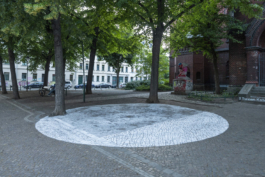
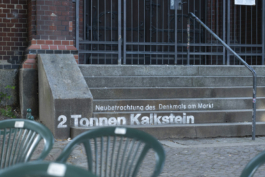
Event Program:2 Tonnen Kalkstein
Neubetrachtung des Denkmals am Markt
17.05. – 13.07.2025
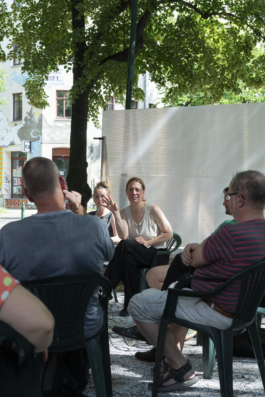
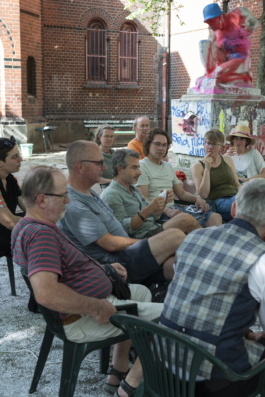
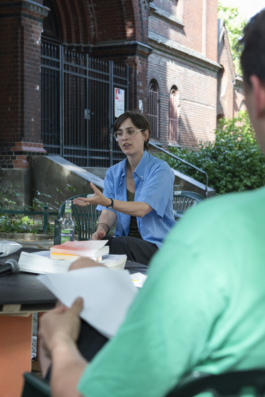
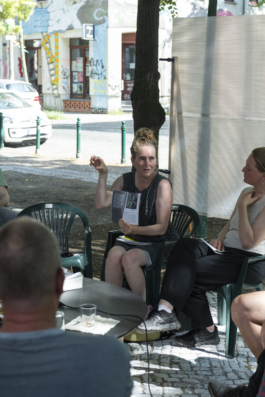
Sunday, May 18 / 4:00 PM
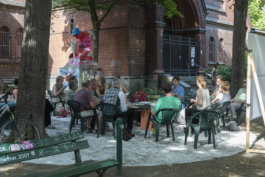
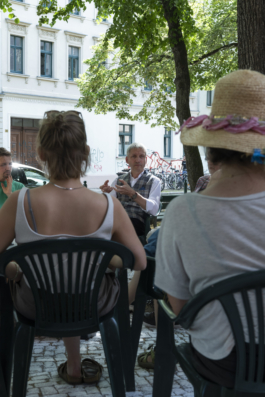
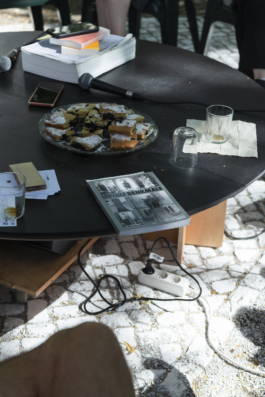
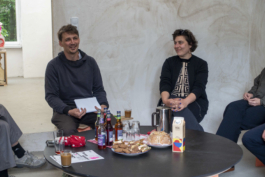
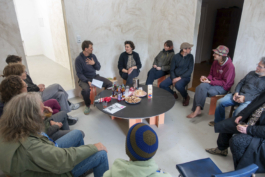
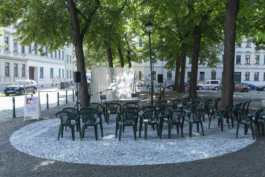
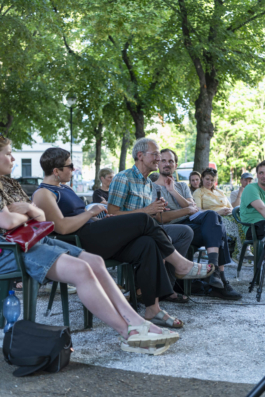
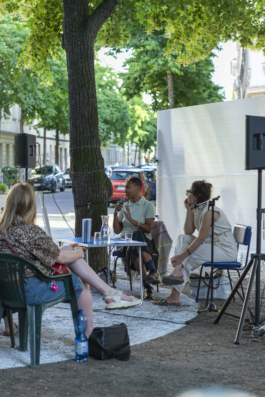
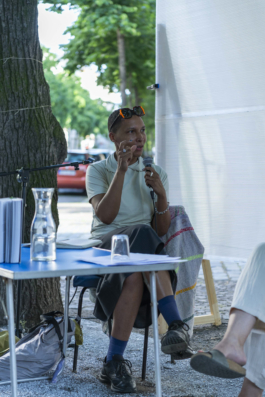
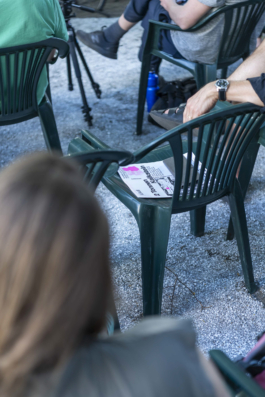
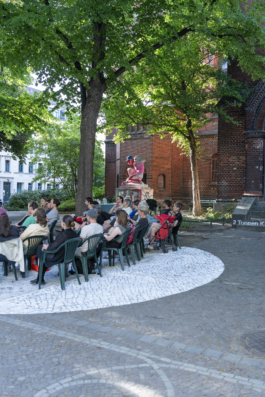
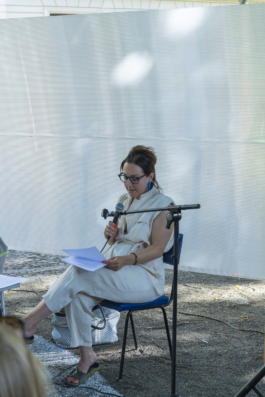
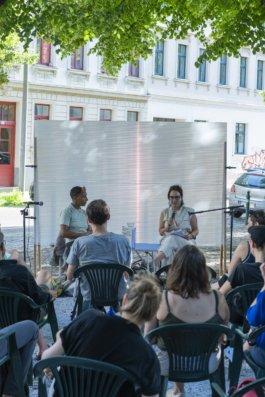
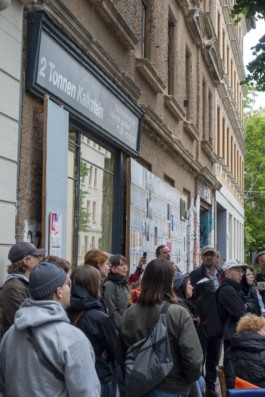
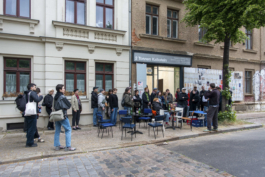
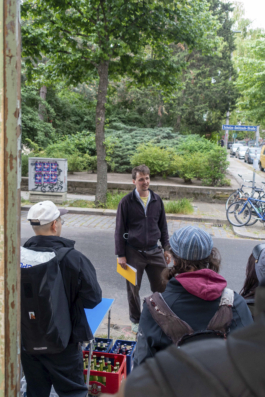
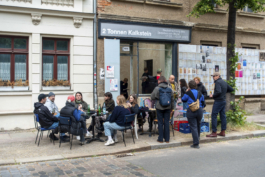
Neighborhood Forum at the Monument I: Taking Stock – What are your thoughts on the monument at Neustädter Markt?
With artists Susanne Schuda, Nicole Six, and Paul Petritsch
Sunday, June 22, 2025 / 4:00 PM
Neighborhood Forum at the Monument II: What Future Does the Monument Have?
With Pastor Stief, Julia Kurz (from the *Stadtkuratorin Leipzig* program), Dr. Ralf Eschenbrücher (Heritage Conservation Office), Dr. Urte Evert (Spandau Citadel Museums), Martha Schwindling, and Marlene Oeken
The monument has long been a subject of debate, with a wide range of differing opinions. For those unfamiliar with it, the purpose of the monument remains unclear. Furthermore, is it still relevant today in its current form and with its existing meaning? Together with Pastor Stief, heritage conservator Dr. Ralf Eschenbrücher, military historian Dr. Urte Evert (Spandau Citadel Museums), and designers Martha Schwindling and Marlene Oeken, we would like to discuss a potential future for the monument.
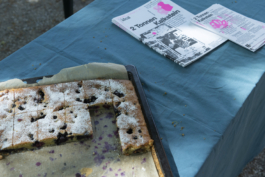
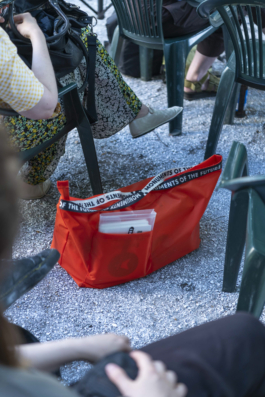
Families are always warmly welcome! In collaboration with Monumental Bag and Pöge-Haus e.V., we will offer art activities for children, and coffee and cake will be provided.
The neighborhood forums are organized in partnership with Stadtkuratorin Leipzig—a program for art in public spaces—and are supported by the Heilig-Kreuz-Gemeinde and Pöge-Haus e.V.

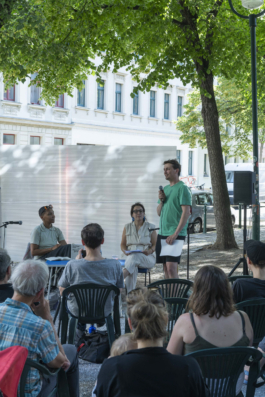
Saturday, 14 June / 6 pm
“Heritage is the Answer! But What Was the Question?” – Museums, Heritage Preservation and the Right to Heritage in a Society Shaped by Migration
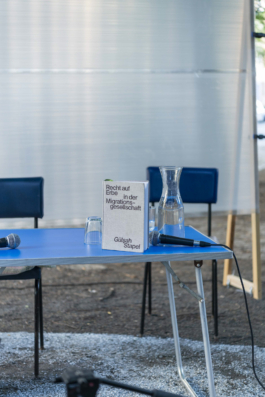
Lecture by Dr. Gülşah Stapel, followed by a conversation with Anike Joyce Sadiq
What does it mean to conceive of cultural heritage in a society shaped by diversity, human rights and the pursuit of social justice? Why is it important to understand the negotiations surrounding cultural heritage not only as a matter of cultural policy, but also as a social issue? Who decides what is preserved – and whose histories remain invisible?
The lecture draws on key ideas from Gülşah Stapel’s book Recht auf Erbe in der Migrationsgesellschaft and examines the significance and tensions of public understandings of memory. It focuses on the critique of established concepts of heritage, hegemonic exclusions from cultural memory, and the search for strategies to overcome them without reproducing a new form of competition over the “right” way to remember.
Using the current debate surrounding the soldiers’ memorial in Leipzig as an example, the lecture explores how contested and politically charged the treatment of memory in public space can be, and what questions this raises for a just and inclusive culture of remembrance. How can public remembrance be shaped without relying on principles of exclusion and competition? And how can political and cultural practices of remembrance become more equitable, pluralistic and inclusive?
Dr. Gülşah Stapel is co-founder and co-director of the TAM Museum, dedicated to 500 years of German-Turkish and transcultural histories. She is also a part-time curator for outreach processes at the Berlin Wall Foundation and a member of the board of ICOM Germany. Of Hanseatic and Bosporus-German background, she is an expert in urban cultural heritage and memory politics. She holds a degree in urban and regional planning and completed her doctoral thesis on identity and heritage as part of a DFG Research Training Group at TU Berlin. Her publication Recht auf Erbe in der Migrationsgesellschaft. Eine Studie an Erinnerungsorten türkeistämmiger Berliner:innen was published in 2023 by Urbanophil Verlag.
The event is organised in cooperation with Stadtkuratorin Leipzig.
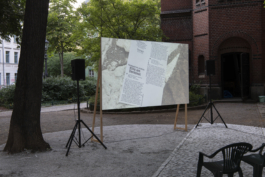
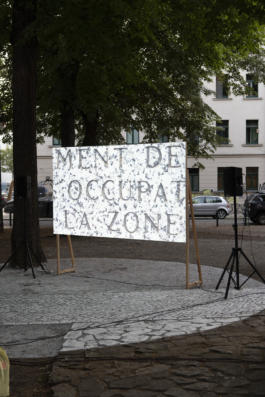
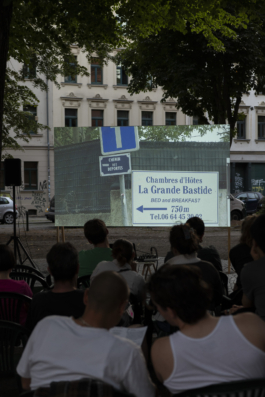


Sunday, 1 June / 8:30 pm
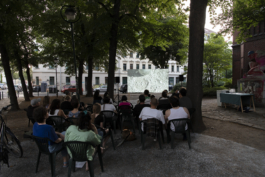
Cinema at the Memorial:
The Halfmoon Files / Philip Scheffner
Germany, 2007, 87 min
“Once upon a time there was a man.
He was caught up in the European war.
Germany took this man prisoner.
He wants to return to India.
If God is merciful, he will soon bring peace.
Then this man will leave here.”
Mall Singh’s words, recorded into a phonograph horn on 11 December 1916 in Wünsdorf near Berlin, crackle and fade away. Ninety years later, Mall Singh is a number on an old shellac record in an archive, one of hundreds of voices of colonial soldiers from the First World War.
The recordings were made through a unique alliance between the military, science and the entertainment industry. In his experimental investigation The Halfmoon Files, Philip Scheffner follows these voices back to the place where they were recorded. Like a memory game that remains incomplete to the very end, he uncovers images and sounds in which the ghosts of the past come to life. Those who pressed the record buttons on their phonographs, cameras and film cameras went on to write official history. Mall Singh and the other prisoners of war from the Halfmoon Camp have disappeared from that history. Their ghosts seem to play tricks on the filmmaker, haunting him as he follows their voices in an attempt to bring them back to their homeland. But the narrative of history slips away from its narrator. And the ghosts refuse to be banished.
The historical background to the film: During the First World War, Islam became part of Germany’s military strategy. In 1914, Germany, allied with the Ottoman Empire, called for jihad in an attempt to persuade Muslim colonial soldiers to switch sides. Muslim prisoners of war were interned in special camps such as the Halfmoon Camp in Wünsdorf, where Germany sought to recruit them for the war against the colonial powers. At the same time, they became objects of scientific interest: the Phonographic Commission, founded in 1915, produced extensive sound recordings, which today form part of the Berlin Lautarchiv (Sound Archive). These historical recordings are the starting point for The Halfmoon Files.
Saturday, 21 June / 8:30 pm
Cinema at the Memorial
Le soldat mourrant des Milles / Maya Schweizer / 9:30 min / 2014 / German subtitles
The Dying Soldier of Les Milles observes both the memorial site of Le Camp des Milles – a former internment camp from the Second World War housed in an old brick factory in Aix-en-Provence – and a monument depicting a dying soldier leaning on his ammunition-filled pockets. The monument commemorates soldiers killed in the two World Wars and the Algerian War.
The camera moves around the soldier and the square, capturing the rhythm of the pétanque game at his feet and presenting the two sites of remembrance in their present-day appearance.
Levitate / Ivan Argote / 25 min / 2022 / Original with English subtitles
Levitate explores the role of monuments in European cities. In large-scale performances, Argote critiques them as symbols of colonial violence. The film documents interventions in Rome, Madrid and Paris that draw attention to the violent histories embodied in historical monuments and literally dismantle them. At the same time, it becomes a space for the artist’s autobiographical reflection on his arrival in Europe. Argote invites us to imagine alternative futures for shared public spaces.
Das andere Denkmal / Nicole Six and Paul Petritsch / 35 min / 2025 / German
By chance, Nicole Six and Paul Petritsch came across a sculpture unknown to the wider public: a figure of a partisan or “torchbearer” – opinions differ – has stood in the basement of the cultural centre of the Slovenian cultural association Radsberg / Slovensko prosvetno društvo Radiše since its opening in 1979. It is said that the sculpture has “always been there”. How it ended up in the cultural centre’s storage room remains unclear to this day. What is certain is that the sculptor Marijan Matijević, who also created the sculpture group at the Peršmanhof, made it in the late 1940s.
17.05. 18:00 Uhr
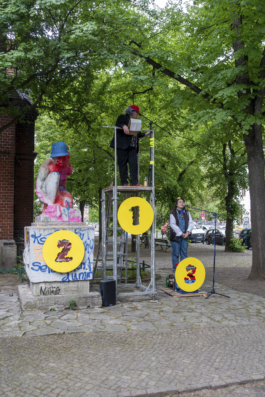
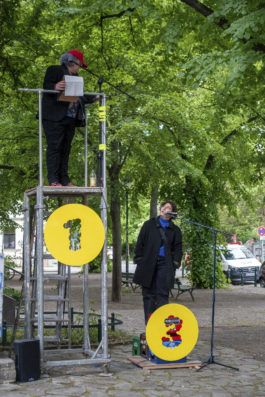
Performance
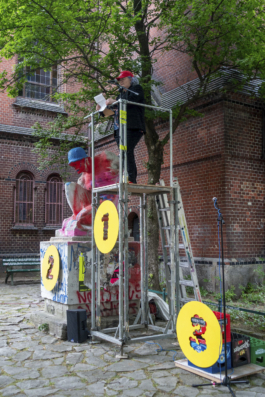
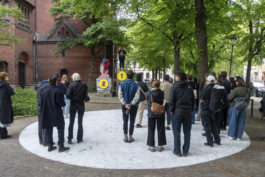
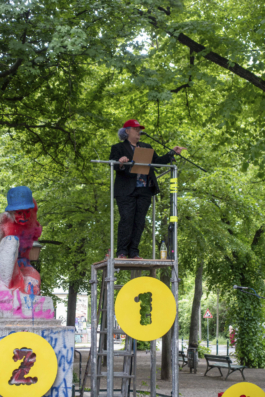
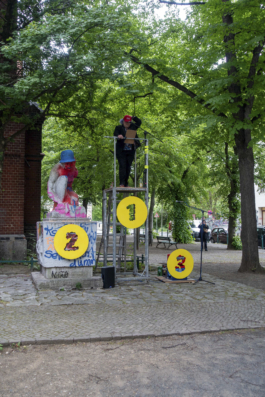
Gute Verlierer / Susanne Schuda
No learning from mistakes.
No apology, no making amends.
No alternative perspective.
Simply losing.
Sharing the loneliness of the loser with other losers—devoid of any comfort, devoid of any goddamn healing, not even the solace of repression.
Demonstrating the sheer magnitude of the deepest fall—and losing even in that.
Losers are deceivers.
Hope is betrayal.
Schudini the Sensitive—therapist to the collective unconscious—steps onto the winner’s podium, and then… we’ll see what happens next.
The project was realized with funding from the Stiftung Kunstfonds, the Federal Government Commissioner for Culture and the Media, and the Cultural Office of the City of Leipzig.

Event Program:2 Tonnen Kalkstein
Neubetrachtung des Denkmals am Markt
17.05. – 13.07.2025
Sunday, May 18 / 4:00 PM
Neighborhood Forum at the Monument I: Taking Stock – What are your thoughts on the monument at Neustädter Markt?
With artists Susanne Schuda, Nicole Six, and Paul Petritsch
Sunday, June 22, 2025 / 4:00 PM
Neighborhood Forum at the Monument II: What Future Does the Monument Have?
With Pastor Stief, Julia Kurz (from the *Stadtkuratorin Leipzig* program), Dr. Ralf Eschenbrücher (Heritage Conservation Office), Dr. Urte Evert (Spandau Citadel Museums), Martha Schwindling, and Marlene Oeken
The monument has long been a subject of debate, with a wide range of differing opinions. For those unfamiliar with it, the purpose of the monument remains unclear. Furthermore, is it still relevant today in its current form and with its existing meaning? Together with Pastor Stief, heritage conservator Dr. Ralf Eschenbrücher, military historian Dr. Urte Evert (Spandau Citadel Museums), and designers Martha Schwindling and Marlene Oeken, we would like to discuss a potential future for the monument.
Families are always warmly welcome! In collaboration with Monumental Bag and Pöge-Haus e.V., we will offer art activities for children, and coffee and cake will be provided.
The neighborhood forums are organized in partnership with Stadtkuratorin Leipzig—a program for art in public spaces—and are supported by the Heilig-Kreuz-Gemeinde and Pöge-Haus e.V.
Saturday, 14 June / 6 pm
“Heritage is the Answer! But What Was the Question?” – Museums, Heritage Preservation and the Right to Heritage in a Society Shaped by Migration
Lecture by Dr. Gülşah Stapel, followed by a conversation with Anike Joyce Sadiq
What does it mean to conceive of cultural heritage in a society shaped by diversity, human rights and the pursuit of social justice? Why is it important to understand the negotiations surrounding cultural heritage not only as a matter of cultural policy, but also as a social issue? Who decides what is preserved – and whose histories remain invisible?
The lecture draws on key ideas from Gülşah Stapel’s book Recht auf Erbe in der Migrationsgesellschaft and examines the significance and tensions of public understandings of memory. It focuses on the critique of established concepts of heritage, hegemonic exclusions from cultural memory, and the search for strategies to overcome them without reproducing a new form of competition over the “right” way to remember.
Using the current debate surrounding the soldiers’ memorial in Leipzig as an example, the lecture explores how contested and politically charged the treatment of memory in public space can be, and what questions this raises for a just and inclusive culture of remembrance. How can public remembrance be shaped without relying on principles of exclusion and competition? And how can political and cultural practices of remembrance become more equitable, pluralistic and inclusive?
Dr. Gülşah Stapel is co-founder and co-director of the TAM Museum, dedicated to 500 years of German-Turkish and transcultural histories. She is also a part-time curator for outreach processes at the Berlin Wall Foundation and a member of the board of ICOM Germany. Of Hanseatic and Bosporus-German background, she is an expert in urban cultural heritage and memory politics. She holds a degree in urban and regional planning and completed her doctoral thesis on identity and heritage as part of a DFG Research Training Group at TU Berlin. Her publication Recht auf Erbe in der Migrationsgesellschaft. Eine Studie an Erinnerungsorten türkeistämmiger Berliner:innen was published in 2023 by Urbanophil Verlag.
The event is organised in cooperation with Stadtkuratorin Leipzig.
Sunday, 1 June / 8:30 pm
Cinema at the Memorial:
The Halfmoon Files / Philip Scheffner
Germany, 2007, 87 min
“Once upon a time there was a man.
He was caught up in the European war.
Germany took this man prisoner.
He wants to return to India.
If God is merciful, he will soon bring peace.
Then this man will leave here.”
Mall Singh’s words, recorded into a phonograph horn on 11 December 1916 in Wünsdorf near Berlin, crackle and fade away. Ninety years later, Mall Singh is a number on an old shellac record in an archive, one of hundreds of voices of colonial soldiers from the First World War.
The recordings were made through a unique alliance between the military, science and the entertainment industry. In his experimental investigation The Halfmoon Files, Philip Scheffner follows these voices back to the place where they were recorded. Like a memory game that remains incomplete to the very end, he uncovers images and sounds in which the ghosts of the past come to life. Those who pressed the record buttons on their phonographs, cameras and film cameras went on to write official history. Mall Singh and the other prisoners of war from the Halfmoon Camp have disappeared from that history. Their ghosts seem to play tricks on the filmmaker, haunting him as he follows their voices in an attempt to bring them back to their homeland. But the narrative of history slips away from its narrator. And the ghosts refuse to be banished.
The historical background to the film: During the First World War, Islam became part of Germany’s military strategy. In 1914, Germany, allied with the Ottoman Empire, called for jihad in an attempt to persuade Muslim colonial soldiers to switch sides. Muslim prisoners of war were interned in special camps such as the Halfmoon Camp in Wünsdorf, where Germany sought to recruit them for the war against the colonial powers. At the same time, they became objects of scientific interest: the Phonographic Commission, founded in 1915, produced extensive sound recordings, which today form part of the Berlin Lautarchiv (Sound Archive). These historical recordings are the starting point for The Halfmoon Files.
Saturday, 21 June / 8:30 pm
Cinema at the Memorial
Le soldat mourrant des Milles / Maya Schweizer / 9:30 min / 2014 / German subtitles
The Dying Soldier of Les Milles observes both the memorial site of Le Camp des Milles – a former internment camp from the Second World War housed in an old brick factory in Aix-en-Provence – and a monument depicting a dying soldier leaning on his ammunition-filled pockets. The monument commemorates soldiers killed in the two World Wars and the Algerian War.
The camera moves around the soldier and the square, capturing the rhythm of the pétanque game at his feet and presenting the two sites of remembrance in their present-day appearance.
Levitate / Ivan Argote / 25 min / 2022 / Original with English subtitles
Levitate explores the role of monuments in European cities. In large-scale performances, Argote critiques them as symbols of colonial violence. The film documents interventions in Rome, Madrid and Paris that draw attention to the violent histories embodied in historical monuments and literally dismantle them. At the same time, it becomes a space for the artist’s autobiographical reflection on his arrival in Europe. Argote invites us to imagine alternative futures for shared public spaces.
Das andere Denkmal / Nicole Six and Paul Petritsch / 35 min / 2025 / German
By chance, Nicole Six and Paul Petritsch came across a sculpture unknown to the wider public: a figure of a partisan or “torchbearer” – opinions differ – has stood in the basement of the cultural centre of the Slovenian cultural association Radsberg / Slovensko prosvetno društvo Radiše since its opening in 1979. It is said that the sculpture has “always been there”. How it ended up in the cultural centre’s storage room remains unclear to this day. What is certain is that the sculptor Marijan Matijević, who also created the sculpture group at the Peršmanhof, made it in the late 1940s.
17.05. 18:00 Uhr
Performance
Gute Verlierer / Susanne Schuda
No learning from mistakes.
No apology, no making amends.
No alternative perspective.
Simply losing.
Sharing the loneliness of the loser with other losers—devoid of any comfort, devoid of any goddamn healing, not even the solace of repression.
Demonstrating the sheer magnitude of the deepest fall—and losing even in that.
Losers are deceivers.
Hope is betrayal.
Schudini the Sensitive—therapist to the collective unconscious—steps onto the winner’s podium, and then… we’ll see what happens next.
The project was realized with funding from the Stiftung Kunstfonds, the Federal Government Commissioner for Culture and the Media, and the Cultural Office of the City of Leipzig.